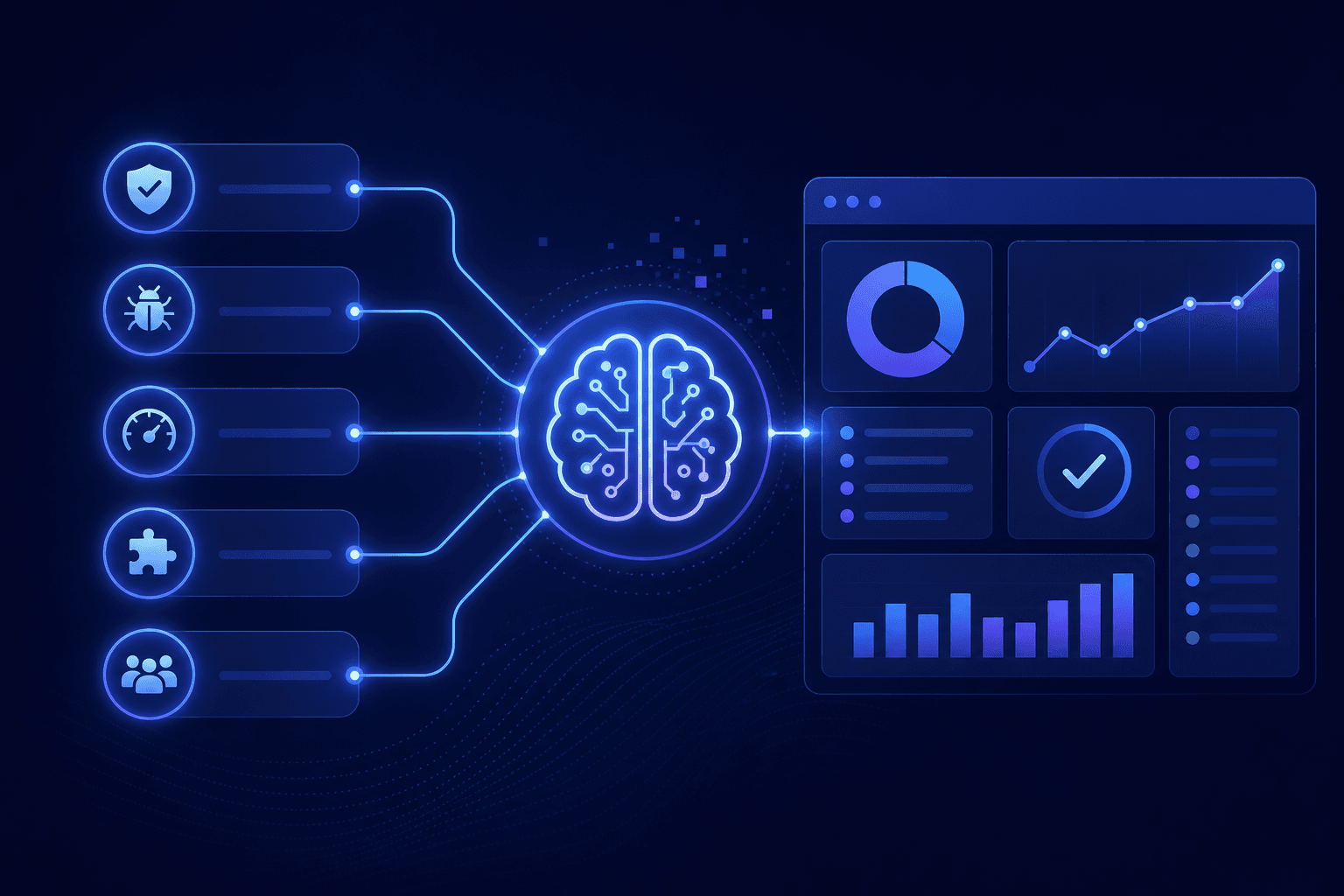
Engineering teams are shipping faster than ever. But is your QA process keeping up? Here are five signs that your current testing strategy is holding you back — and how AI-driven workflows can help.
1. Your CI Pipeline Is a Bottleneck
If your team regularly waits 30+ minutes for tests to complete, or worse, merges code despite failing tests because "that test is always flaky," your pipeline has become a bottleneck rather than a safety net.
AI solution: Intelligent test selection runs only the tests most relevant to each code change. AI agents analyze the diff and prioritize tests by risk, cutting pipeline time dramatically while maintaining coverage.
2. Test Maintenance Consumes More Time Than Writing New Tests
A healthy test suite should be an asset, not a liability. If your team spends more time fixing broken tests than writing new ones, the maintenance burden has tipped the wrong way.
AI solution: Self-healing locators and adaptive test flows mean tests fix themselves when UI changes don't affect functionality. Your team focuses on quality strategy, not selector debugging.
3. Nobody Trusts the Test Results
When failures are ignored, re-run buttons are clicked reflexively, and "it passed on the second try" is accepted as success — trust in your test suite is gone. This is dangerous because real bugs start slipping through.
AI solution: AI agents classify failures by root cause — distinguishing genuine bugs from environmental issues, timing problems, and test defects. Every failure comes with actionable context, rebuilding trust in what your tests are telling you.
4. Regression Bugs Keep Reaching Production
If your users are finding bugs that your tests should have caught, your coverage has gaps — but adding more tests isn't always the answer. More tests mean more maintenance, and the cycle continues.
AI solution: AI agents map your application's critical user flows and automatically generate tests that cover the highest-risk paths. They adapt as your application evolves, closing coverage gaps without manual intervention.
5. New Hires Can't Contribute to Testing for Months
If your test framework requires deep institutional knowledge — custom abstractions, complex page objects, environment-specific configurations — onboarding is slow and painful.
AI solution: AI-driven workflows abstract away framework complexity. New team members describe what they want to test in plain language, and agents handle the implementation details. The barrier to contributing is dramatically lowered.
The Bottom Line
These five signals point to a fundamental problem: traditional test automation doesn't scale with modern development practices. AI-driven QA isn't about replacing your team — it's about amplifying their impact by handling the repetitive, brittle, time-consuming parts of quality assurance.
At LoveAutomate, we're building the agentic workflows that make this possible. If any of these signals resonated, it might be time to explore what AI can do for your QA process.